


From single models to modular agents
Instead of a single monolithic model, we investigate systems in which an orchestrator coordinates several specialised language models, each contributing a distinct ability such as reasoning, asking for missing information or verifying a result. The orchestrator assigns subtasks to the most suitable model, which makes the system more accurate and transparent and lets individual components be swapped as models improve.
Verifiers as the learning signal
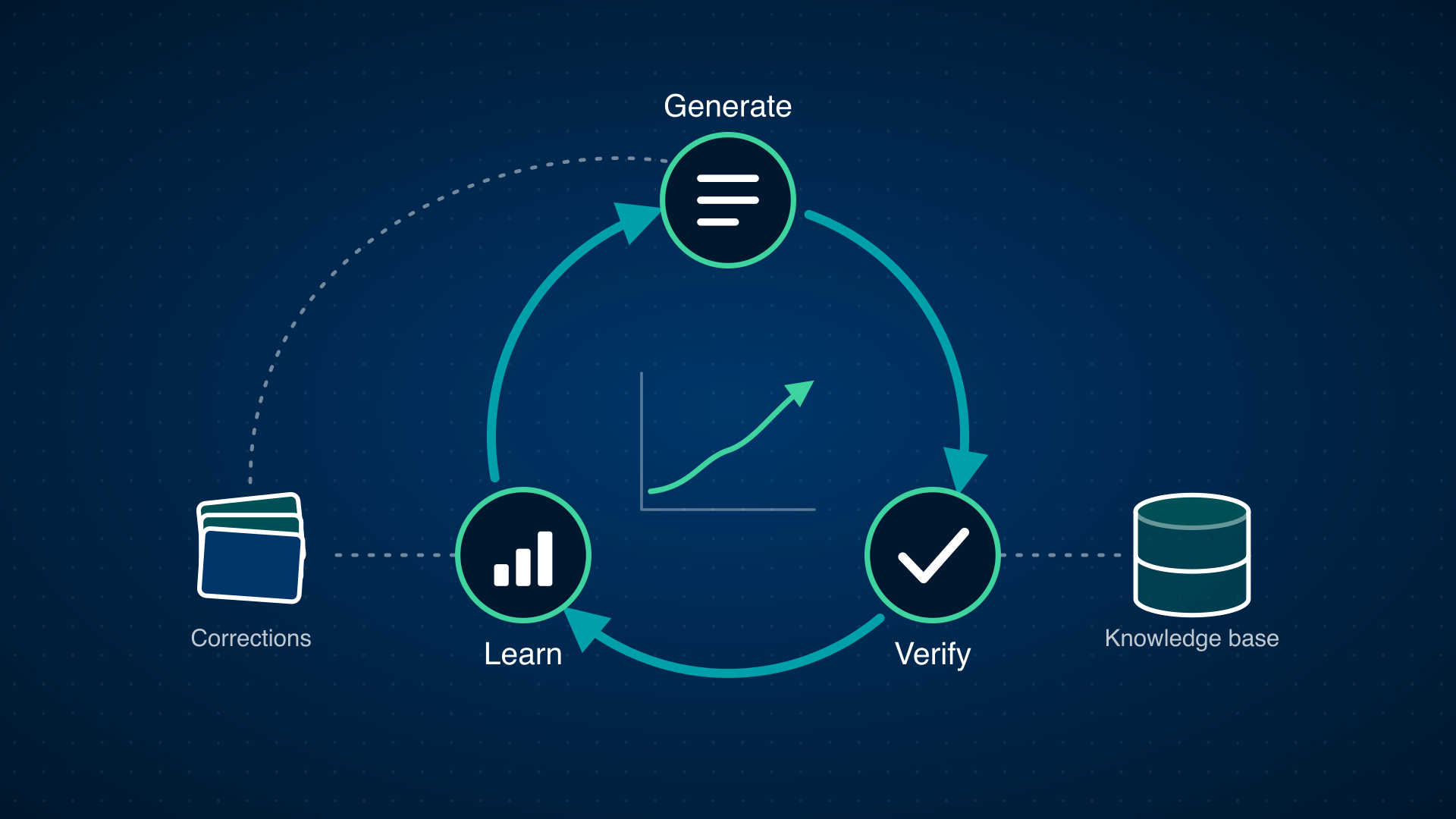
A central component is the verifier. Rather than only checking a final answer, a verifier assesses the reasoning that led to it against established knowledge. In the medical domain we explore how such verifiers can be created automatically from knowledge bases such as WikiDoc, and how they can serve as verifiable rewards for training and evaluating medical reasoning in language models.
Learning from failures
When a system's output fails verification, the failure itself is informative. We study how systems can analyse their errors, turn them into reusable corrections and apply them to later cases, so that performance improves over time, in particular on rare cases where training data is sparse.
Application
The first application is diagnosis prediction from clinical text, building on the project Predicting Clinical Outcomes.