


About us
We are the research group of Prof. Dr. Elisabeth Grohmann at the Berliner Hochschule für Technik. Our work centres on antibiotic resistance: how bacteria pass resistance genes to one another, how those genes spread through populations, and how the resulting resistance can be detected faster. Alongside this project we study horizontal gene transfer and plasmid biology, biofilm inhibitors, and antimicrobial surfaces, combining molecular biology with fluorescence microscopy and plasmid engineering.
The project
When someone has a bacterial infection, doctors often need to know which antibiotics will still work. The standard way to find out is to grow the bacteria in the laboratory, expose them to each drug in turn, and see which ones survive. It is reliable, but it takes one to four days. In the meantime, treatment is started empirically, following clinical guidelines and local resistance patterns rather than the individual patient's own bacteria.
We are investigating whether that waiting time can be shortened by looking at the bacteria instead of testing them.
The idea we are testing is that resistant bacteria may not look quite the same as susceptible ones, even when no antibiotic is present. Why that would be is an open question, and part of what we want to find out. But if such a difference exists and is consistent, it should be measurable.
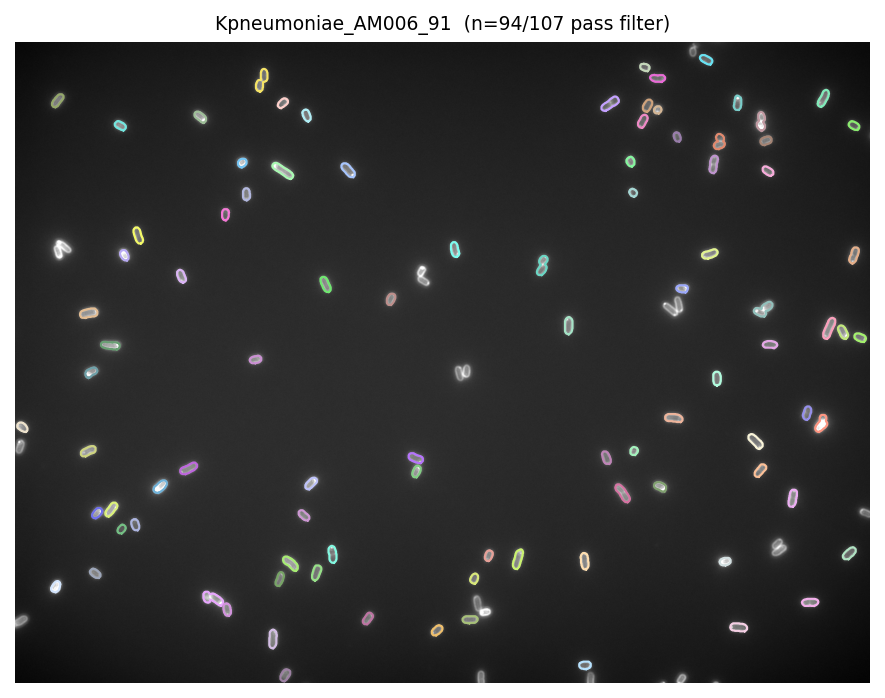
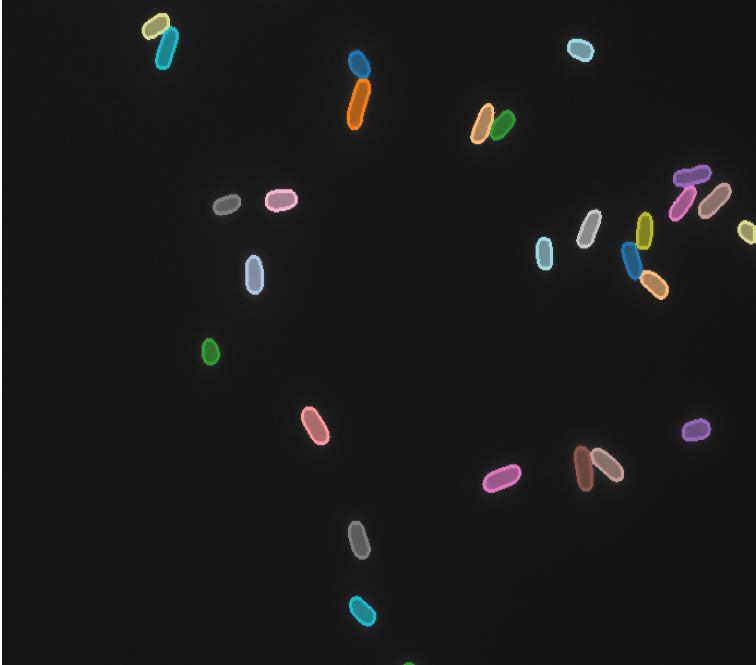
Any such difference would be far too small for the human eye. So we take high-resolution microscope images of bacteria and use software to outline every individual cell and measure its shape precisely. With tens of thousands of cells measured this way, we train machine learning models on these measurements, and test whether they can identify resistant cells they have never seen before.
Alongside this, we also raise resistant bacteria ourselves in the laboratory, starting from a single harmless strain and gradually increasing the pressure over several weeks. This gives us resistant and non-resistant bacteria that are otherwise nearly identical, which makes the comparison much cleaner than working with clinical samples alone.
If it works, this would not replace laboratory testing. But it could tell a hospital laboratory where to look first, using an image taken from a sample they already have.
The project is ongoing, and we will post results here once they are published.