


 HTW Berlin
 LinkedIn
 Website
 Mario.Koddenbrock@HTW-Berlin.de
 GitHub
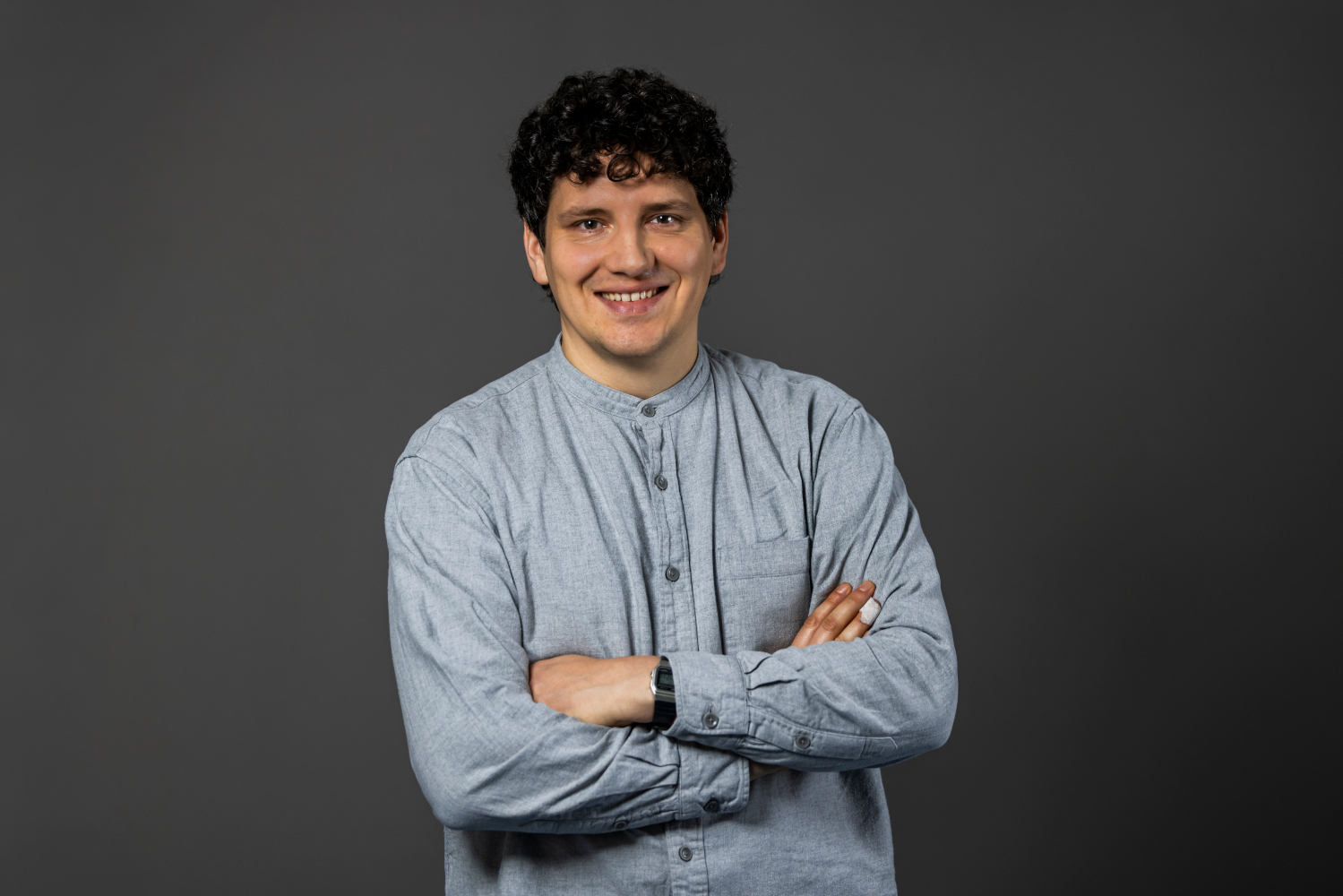
Mario’s academic background includes a thesis in numerical analysis on steady Navier-Stokes equations. He then spent over ten years at a research institute for applied computer science, where he worked on machine learning for real-world applications. His research during this time focused on noise and vibration analysis as well as computer vision, developing data-driven methods for signal processing, pattern recognition, and visual inspection under challenging conditions such as high noise levels, limited labeled data, and domain shifts.
Currently, his doctoral research concentrates on the adaptation and robustness of pretrained foundation models, particularly in vision domains. A central aim of his work is to enable these models to perform reliably in specialized application areas where annotated data is scarce or expensive to obtain. To achieve this, he investigates approaches such as high-quality synthetic data generation and efficient model adaptation strategies.
Publications
- Synthetic data enables human-grade microtubule analysis with foundation models for segmentation
- 'Oh LLM, I'm Asking Thee, Please Give Me a Decision Tree': Zero-Shot Decision Tree Induction and Embedding with Large Language Models
- On the Domain Robustness of Contrastive Vision-Language Models
- Robust Weight Imprinting: Insights from Neural Collapse and Proxy-Based Aggregation
- RamanBench: A Large-Scale Benchmark for Machine Learning on Raman Spectroscopy
- Feedback-driven object detection and iterative model improvement for accurate annotations
- Diagnosing Diversity Collapse and Validating Mask-Conditioned Diffusion for Labeled Microtubule Microscopy