

From Paper to Practice
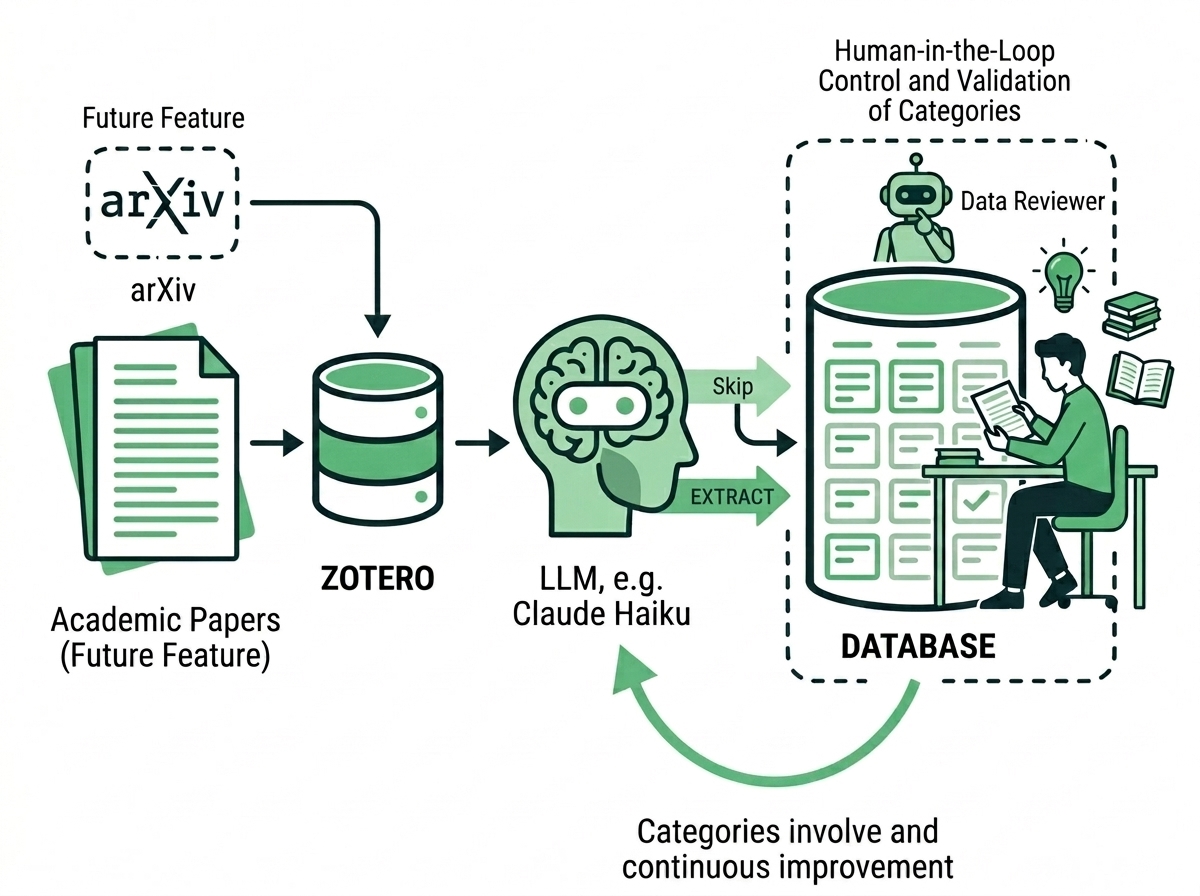
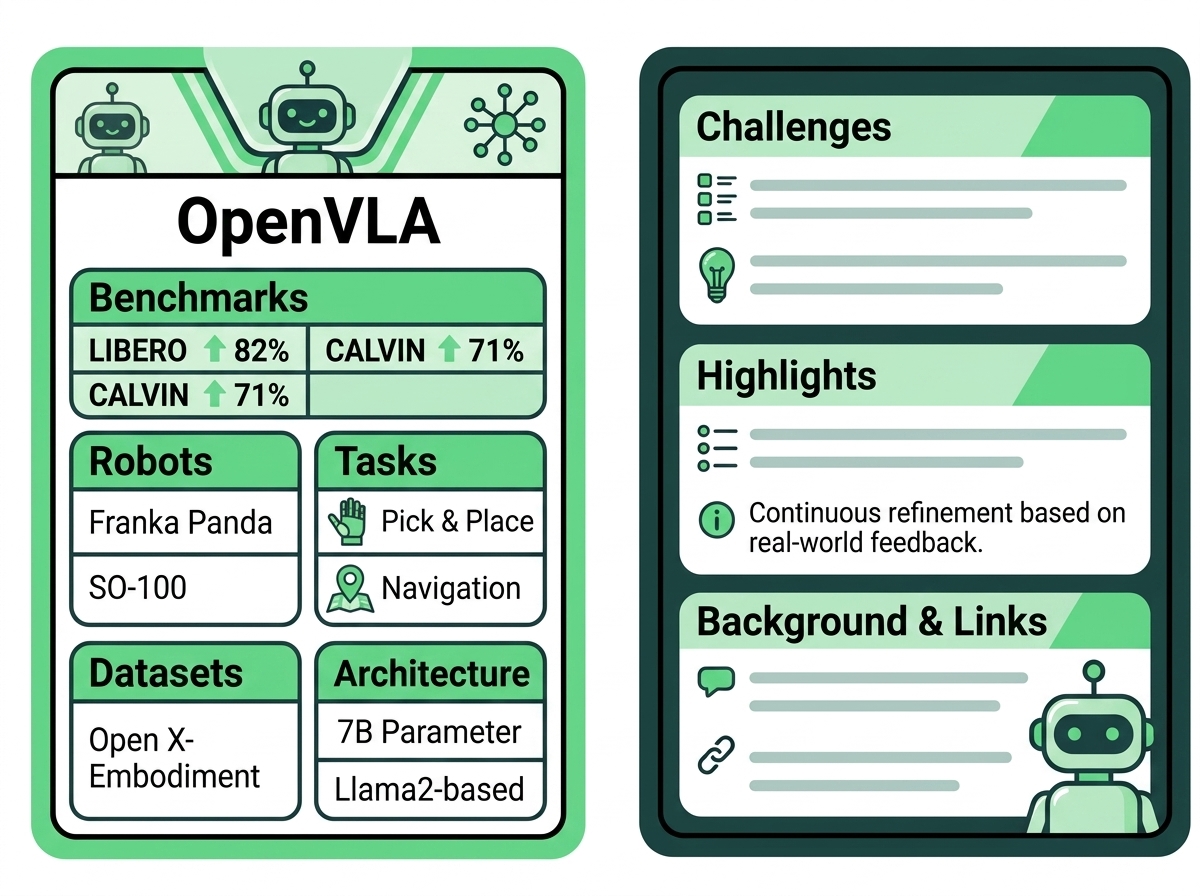
Vision-Language-Action (VLA) models are systems that take visual observations and language instructions as input to generate robot control commands. The field is rapidly growing, with publications increasing from 4 in 2020 to over 276 in 2025, covering applications ranging from manipulation and navigation to humanoid robotics. Despite this growth, applying VLA models in practice remains challenging: setting up these models, adapting them to new hardware, and assessing their suitability for specific use cases requires significant effort, particularly for research teams without access to proprietary systems. While existing survey works provide overviews of model architectures and benchmarks, a structured and up-to-date overview of truly open-source VLA models and their practical applicability remains missing. In this project, we create an AI-powered research and extraction agent that automatically scans research papers and model repositories to build and maintain a searchable database of open-source VLA models. Furthermore, we develop a VLA-specific Model Card format, a compact and standardized representation inspired by Mitchell et al. (2019), designed to make models quickly comparable and searchable for researchers and practitioners working with robotic platforms. A key goal is identifying the most relevant categories for this format through experiments and literature review, in order to capture the information that matters most when selecting and deploying a VLA model.